How Many Days After Egg Retrieval Is Embryo Transfer?
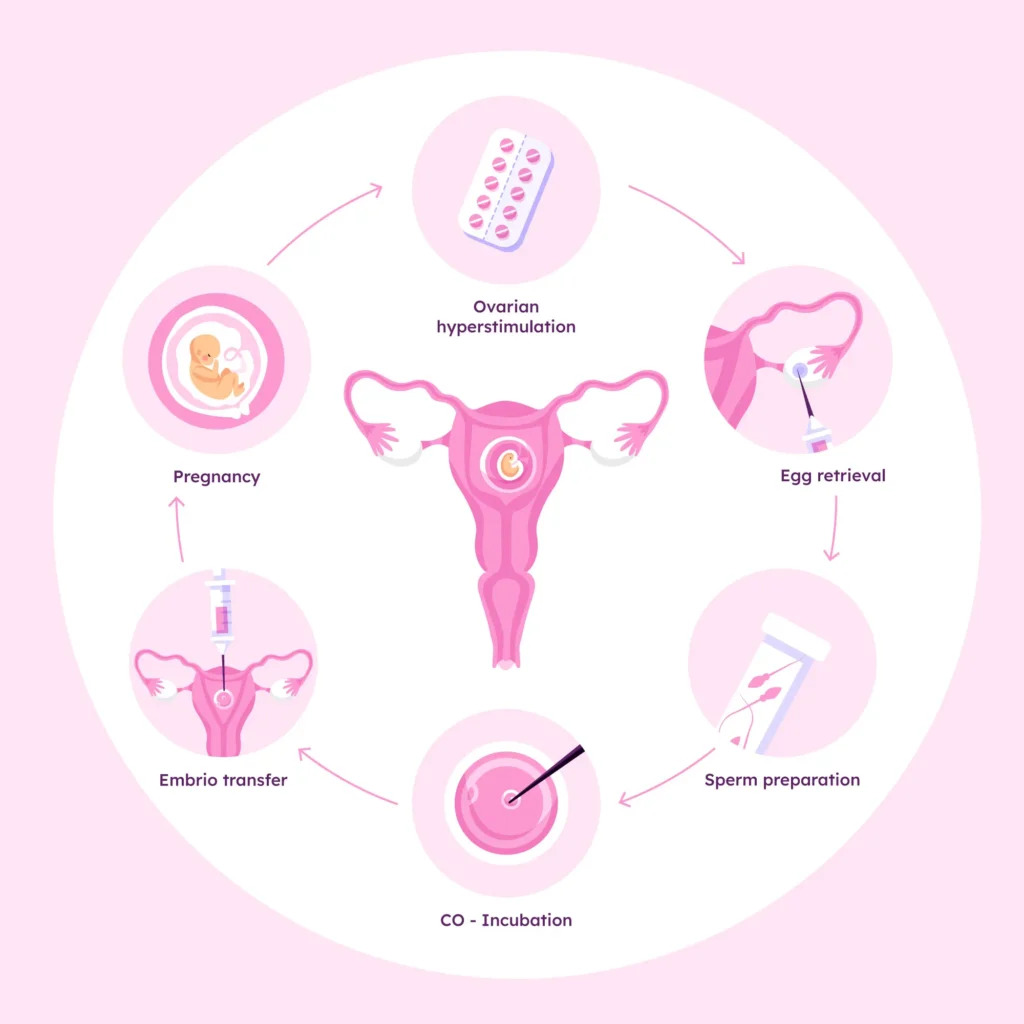
Embryo transfer happens either 3 days or 5 days after egg retrieval. A Day-3 transfer places a cleavage-stage embryo into the uterus. A Day-5 (blastocyst) transfer — preferred at Javitri Hospital for most patients — waits until the embryo reaches a more advanced, stronger stage. Some slower-developing embryos are transferred or frozen on Day 6.
How Many Days After Egg Retrieval Is Embryo Transfer?
Embryo transfer is performed either 3 or 5 days after egg retrieval — sometimes Day 6 if the embryo develops more slowly. The gap reflects the time needed for the embryo to reach the right stage of development before it can be placed into the uterus.
At Javitri Hospital, the embryologist monitors every embryo daily after retrieval and decides the optimal transfer day based on actual development — not a fixed schedule. In most cases, the answer is Day 5.
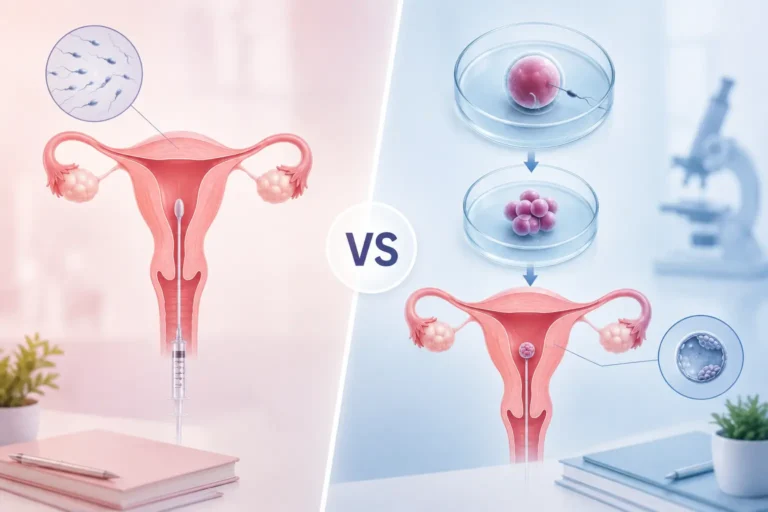
Day-3 Transfer vs Day-5 Transfer — What Is the Difference?
The difference is the embryo’s developmental stage at the time of transfer. Both are clinically valid — but suit different situations.
Day-3 Transfer (Cleavage Stage — 6–8 cells)
- Embryo transferred earlier, at the 6–8 cell stage
- Less time in laboratory culture — reduces culture risk
- Chosen when embryo numbers are low
- Prevents risk of embryos failing to survive to Day 5
- Success rates slightly lower per transfer than Day 5
Day-5 Transfer (Blastocyst Stage)
- Embryo has developed a fluid cavity and two distinct cell layers
- Better embryo selection — only the strongest survive to Day 5
- Higher implantation rate per transfer
- More natural timing with the uterine lining’s receptivity
- Extra blastocysts can be frozen for future FET cycles
- Preferred choice at Javitri Hospital for most patients
When a Day-3 Transfer Is the Right Decision
Day-3 transfer is not inferior — it is appropriate in specific circumstances:
- Only a small number of fertilised eggs are available — waiting risks losing all embryos
- Embryo development is slow and extended culture is not advised
- Previous blastocyst culture resulted in no embryos surviving to Day 5
- Medical reasons specific to the patient’s history or protocol
Why Day-5 Blastocyst Transfer Gives Better Results
The main advantage of waiting until Day 5 is better embryo selection. Not all fertilised eggs develop into healthy blastocysts — only those with strong chromosomal integrity tend to make it. This natural selection in the laboratory means the embryo selected for transfer has already demonstrated its viability.
There is also a biological timing advantage. A Day-5 blastocyst is placed into the uterus at almost exactly the same developmental stage it would arrive naturally after fertilisation in a natural cycle — improving synchrony between embryo and uterine lining, which raises implantation rates.
DAY-BY-DAY TIMELINE
What Happens Between Egg Retrieval and Embryo Transfer?
Every day between egg retrieval and transfer, your embryos are developing in the controlled environment of the Javitri Hospital embryology laboratory.
Day 0 — Retrieval Day — Egg Retrieval (OPU)
Eggs collected under IV sedation. Fertilisation performed same day by IVF or ICSI. Male partner provides semen sample. Patient rests at home after discharge.
Day 1 — Fertilisation Confirmed
Each fertilised egg (zygote) checked for successful fertilisation — two pronuclei visible. Embryologist calls with the fertilisation report. Light activities can resume.
Day 2 — First Cell Division
Healthy embryos have 2–4 cells. Embryologist observes but does not disturb. Continue all prescribed medications.
Day 3 — Cleavage Stage — Transfer or Continue
Embryos have 6–8 cells. If Day-3 transfer is recommended, it happens today. If blastocyst culture is planned, embryos continue in the incubator. Progress update may be given.
Day 4 — Morula Stage
Cells compact together into a morula — transitional stage, not a transfer day. Compaction is a positive sign of development.
Day 5 — Blastocyst — Most Common Transfer Day
Embryos that develop on schedule reach full blastocyst stage. Best-graded blastocyst selected for transfer. Additional high-quality blastocysts vitrified (frozen) for FET.
Day 6 — Late Blastocyst — Extended Culture
Slower-developing embryos may reach blastocyst on Day 6. Still viable for transfer or freezing. Transfer decision based on blastocyst quality and grade.
Not Sure Whether Day 3 or Day 5 Is Right for You?
Our embryologists explain your embryo development at every step and recommend the best transfer day for your cycle.
Is Transfer Always Done Right After Egg Retrieval?
No. While many patients have a fresh embryo transfer in the same cycle as egg retrieval (Day 3 or Day 5), sometimes all embryos are frozen and transfer happens in a separate later cycle — called a Frozen Embryo Transfer (FET).
When a Freeze-All and FET Is Recommended
- Risk of OHSS — freezing all embryos and transferring later is safer for the patient
- Thin endometrium on transfer day — gives the lining time to recover
- PGT genetic testing — embryos biopsied and frozen while test results are awaited
- Elevated progesterone detected before retrieval — may reduce fresh transfer success
💡 Good news: FET cycles have equivalent or sometimes better success rates than fresh transfer — the uterus has more time to recover from stimulation before the embryo arrives. FET does not require repeating egg retrieval.
Not Sure Whether Day 3 or Day 5 Is Right for You?
Our embryologists explain your embryo development at every step and recommend the best transfer day for your cycle.
📋 Contents
- How Many Days After Egg Retrieval Is Embryo Transfer?
- Day-3 Transfer vs Day-5 Transfer — What Is the Difference?
- Why Day-5 Blastocyst Transfer Gives Better Results
- Is Transfer Always Done Right After Egg Retrieval?
- Frequently Asked Questions
Book a free consultation — call or send a message.
🔗 Related Articles
How Many Days After Egg Retrieval Is Embryo Transfer? — FAQs
Embryo transfer happens either 3 or 5 days after egg retrieval. A Day-3 transfer places a cleavage-stage embryo (6–8 cells) into the uterus. A Day-5 transfer waits until the embryo develops into a blastocyst — a more advanced and preferred stage. Some slower-developing embryos are transferred on Day 6. The embryologist decides the optimal day based on actual embryo development.
Day-3 transfer places an embryo at the 6–8 cell cleavage stage into the uterus. Day-5 blastocyst transfer waits until the embryo develops a fluid cavity and two distinct cell layers. Day-5 allows better embryo selection and gives higher implantation rates, but requires sufficient embryo numbers to safely culture to that stage.
For most patients with several fertilised embryos, Day-5 blastocyst transfer gives 10–15% higher clinical pregnancy rates per transfer than Day-3. However, if few embryos are available, a Day-3 transfer avoids the risk of all embryos failing to survive extended culture — making it the appropriate choice in that situation.
Yes. Some embryos develop more slowly and reach blastocyst stage on Day 6. A Day-6 blastocyst transfer is clinically accepted and still gives good pregnancy rates. At Javitri Hospital, embryos are monitored daily — a strong Day-6 blastocyst is either transferred or vitrified for a future FET cycle.
Fertilised eggs are cultured in precisely controlled incubators in the embryology laboratory. They develop from zygote (Day 1) to cleavage stage (Day 2–3), morula (Day 4), and blastocyst (Day 5–6). Embryologists grade each embryo daily and select the highest-quality one for transfer. Surplus good-quality blastocysts are frozen by vitrification.
No. Sometimes all embryos are frozen and transfer happens in a separate cycle (Frozen Embryo Transfer — FET). A freeze-all strategy is recommended for OHSS risk, thin endometrium, PGT genetic testing, or elevated progesterone. FET cycles have equivalent or sometimes better success rates than fresh transfer.
Rest at home on retrieval day, then resume light activities from Day 1. Take all prescribed medications as instructed — typically progesterone support. Avoid heavy exercise, hot baths, alcohol, and saunas. Expect daily embryo development updates from your embryologist and attend the clinic on your scheduled transfer day.
Embryo transfer is typically painless and requires no anaesthesia. A thin, soft catheter is passed gently through the cervix into the uterus under ultrasound guidance — most patients describe it as similar to a cervical smear, lasting only a few minutes. Mild cramping afterwards is normal and resolves quickly.
Day-5 blastocyst transfer gives 10–15% higher clinical pregnancy rates per transfer than Day-3 in patients with sufficient embryo numbers for blastocyst culture. However, cumulative success rates — accounting for all frozen embryos from the same cycle — are broadly similar between both approaches over multiple transfer attempts.
Javitri Hospital performs embryo transfer under ultrasound guidance in a NABH-certified facility with a dedicated embryology laboratory. Our team cultures embryos to blastocyst stage with daily monitoring. Dr. Rajul Tyagi — 30+ years of IVF experience, trained at Cleveland Clinic USA and Brussels University — advises on the optimal transfer day for every patient’s individual situation. Call +91-9936068274 to begin.
Ready to Start IVF at Javitri Hospital, Lucknow?
We’ll walk you through exactly what to expect, before, during, and after each stage. Free consultation available.