Female Infertility · Hormone Management · Since 1997

Thyroid and IVF Care in Lucknow

A thyroid problem is one of the few causes of IVF failure that is simple to find and simple to correct. It affects ovulation, the lining of the uterus and the earliest weeks of pregnancy, yet a mildly underactive thyroid produces almost no symptoms and is regularly missed. At Javitri Hospital, thyroid function is checked before every IVF cycle, corrected properly first, and monitored through stimulation and pregnancy.

Tested Before IVF

TSH, free T4 and antibodies

In House Lab

Hormone testing on site

Watched in Pregnancy

Dose reviewed each trimester

Since 1997

Caring for families in Lucknow

Book a Consultation Call +91 99360 68274

Medically reviewed by Dr. Rajul Tyagi, Founder and Director, Javitri Hospital. MD Obstetrics and Gynaecology, KGMU. Trained at Cleveland Clinic, USA. Chairperson, ISAR UP Chapter.

How the Thyroid Affects Fertility and IVF

The thyroid is a small gland in the neck that sets the pace of your metabolism. Reproduction is tightly linked to it, because thyroid hormone influences the pituitary signals that drive ovulation, the way the ovary responds to those signals, and the receptivity of the uterine lining that an embryo has to implant into.

When the thyroid is underactive, the pituitary raises TSH to compensate. Higher TSH is often accompanied by higher prolactin, and the combination disturbs the release of an egg. Cycles become irregular, some cycles pass without ovulation at all, and the luteal phase after ovulation can be too short to sustain an early pregnancy. An overactive thyroid causes its own problems, including irregular or absent periods and a higher risk of early pregnancy loss.

The link between thyroid and IVF matters even when everything else is done well. You can have excellent embryos and a technically flawless transfer, and still fail to implant if the hormonal environment receiving that embryo is wrong. This is why we treat thyroid status as a prerequisite of the cycle, not an afterthought. Read more about our female infertility care.

THYROID AND IVF AT A GLANCE
Tested before every cycleTSH and free T4
Antibody checkTPO antibodies
Usual target before transferTSH below 2.5
TreatmentLevothyroxine tablets
Retest intervalFour to six weeks
In pregnancyDose usually increases

Thyroid Problems That Affect IVF

Not every thyroid abnormality carries the same weight in fertility. These are the ones that matter before an IVF cycle.

Thyroid and IVF Failure

When a cycle fails and the embryos looked good, thyroid function is one of the first things we go back and examine. There are four ways a thyroid problem produces IVF failure, and each is correctable.

The first is simply that it was never tested, or was tested once years ago. The second is that it was tested but judged against a general laboratory range rather than a fertility range. A TSH of 4 is reported as normal on most laboratory reports, yet for a woman about to have an embryo transferred it is usually too high, and the target before conception is generally below 2.5.

The third is the one most often overlooked. Ovarian stimulation raises oestrogen sharply, and oestrogen increases the protein in blood that binds thyroid hormone. That leaves less free hormone available, so the thyroid has to produce more to keep up. A woman whose TSH was acceptable at baseline can drift above target by the time of transfer, particularly if she has TPO antibodies or is already on levothyroxine. Checking only before starting misses this entirely.

The fourth is thyroid autoimmunity itself. Women with TPO antibodies carry a higher risk of miscarriage even when TSH readings look satisfactory, so they need tighter targets and closer follow up rather than routine care.

FOUR CAUSES OF THYROID IVF FAILURE
Never testedMissed entirely
Wrong target usedLab range, not fertility range
Drift during stimulationOestrogen raises demand
TPO antibodiesHigher loss risk
Our responseRetest through the cycle
Correction timeUsually weeks, not months

How We Manage Thyroid Before and During IVF

The aim is a stable thyroid before stimulation begins, and a thyroid that stays stable through transfer and into pregnancy.

Symptoms Worth Mentioning

Subclinical hypothyroidism often produces nothing noticeable, which is why testing matters more than symptoms. Still, tell your specialist if you have experienced any of these.

  • Irregular, heavy or absent periods
  • Persistent tiredness that rest does not resolve
  • Weight gain without a change in diet, or unexplained weight loss
  • Feeling cold when others do not, or unusual heat intolerance
  • Dry skin, hair fall or brittle nails
  • Constipation, low mood or difficulty concentrating
  • Palpitations, tremor or anxiety, which suggest an overactive gland
  • Swelling at the front of the neck
  • A family history of thyroid disease
  • A previous miscarriage or a failed IVF cycle

None of these confirms a thyroid problem on its own, and their absence does not rule one out. Only the blood test settles it.

Levothyroxine and Safety in Pregnancy

Levothyroxine replaces the hormone your own thyroid is not making enough of. It is the same hormone the body produces naturally, which is why it is considered safe to continue through pregnancy and while breastfeeding. Stopping it because you have conceived is one of the more harmful things a patient can do without advice.

How to take it matters more than most people are told. It is absorbed best on an empty stomach, first thing in the morning, with water and nothing else for about half an hour. Calcium and iron supplements, which many fertility patients take, interfere with absorption and should be separated by at least four hours. Taking the tablet with your morning tea or with your prenatal vitamins can be enough to keep your level stubbornly out of range.

Your dose is not fixed. It commonly needs to rise once pregnancy begins, and it is reviewed rather than assumed. Read more about our high risk pregnancy care.

Why Thyroid Care Belongs Inside the Fertility Clinic

Thyroid management for fertility is not the same as general thyroid management. The targets are tighter, the timing is tied to your cycle, and the dose has to move as stimulation and pregnancy change the demand.

When thyroid care sits with a separate physician who does not know your transfer date, the adjustments arrive late. At Javitri the same team that plans your IVF also holds your thyroid results, so testing and dose changes are timed around the cycle rather than around a separate appointment calendar. Our in house pathology means results come back quickly enough to act on within the same cycle.

After conception the continuity carries forward. Because Javitri is a complete women’s hospital, your thyroid monitoring in pregnancy is handled by the same institution, with fetal medicine and a 30 bed NICU on the same campus.

Being Honest About What Thyroid Correction Can Do

Correcting the thyroid removes an obstacle. It does not solve every fertility problem, and we would rather set that out clearly than let it be assumed.

  • It can restore ovulation where thyroid dysfunction was the reason it stopped
  • It supports a healthier environment for implantation and early pregnancy
  • It cannot improve egg quality, open blocked tubes or correct a low sperm count
  • It cannot reverse the effect of age on ovarian reserve
  • Antibodies do not disappear with treatment, so monitoring continues

If your thyroid is the only abnormality, correcting it may be all you need. If other factors are present, they are addressed alongside, through IUI or IVF as your diagnosis requires.

Your Fertility Team

Thyroid and IVF care at Javitri is led by our senior fertility specialists, with obstetric and fetal medicine support once you conceive.

Dr. Rajul Tyagi

  • Founder, Director and Head of Infertility
  • Chief Consultant, IVF and Gynaecology
  • Cleveland Clinic Trained

Dr. Lavanya Tyagi

  • Senior IVF Specialist
  • Infertility and Reproductive Medicine
  • Clinical Embryology

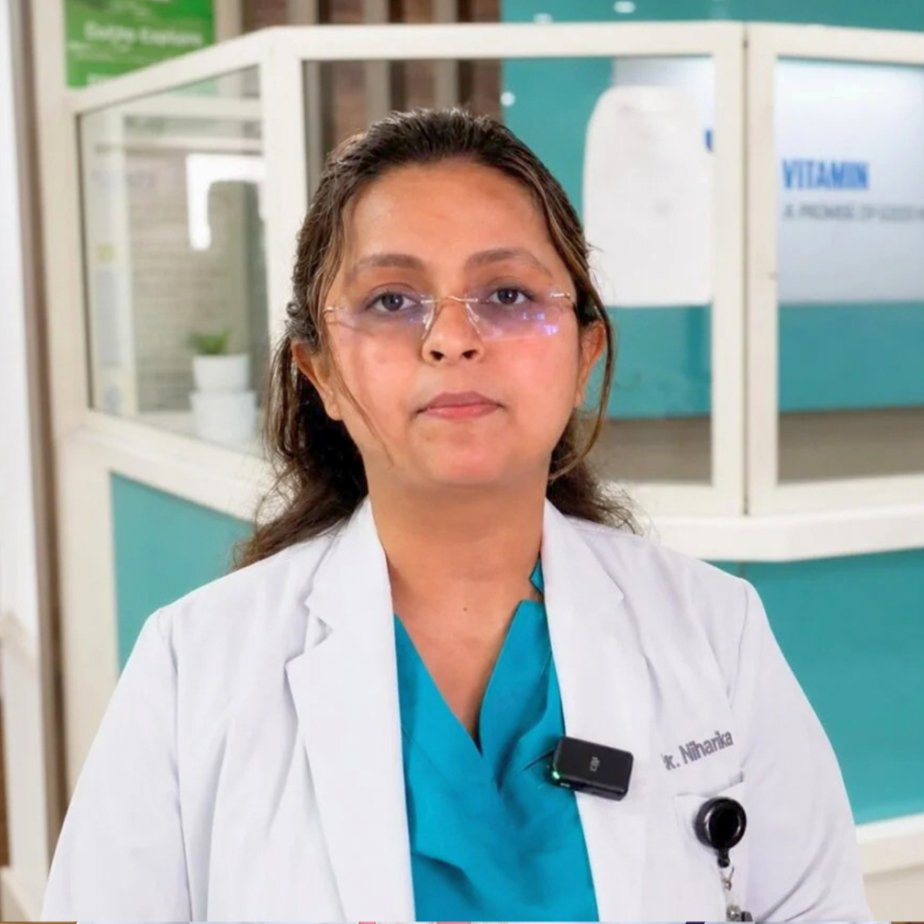
Dr. Niharika Tyagi

  • IVF and Fertility Consultant
  • Fetal Medicine
  • High Risk Pregnancy

Dr. Rajul Tyagi

  • Founder, Director and Head of Infertility
  • Chief Consultant, IVF and Gynaecology
  • Cleveland Clinic Trained

Dr. Lavanya Tyagi

  • Senior IVF Specialist
  • Infertility and Reproductive Medicine
  • Clinical Embryology

Dr. Niharika Tyagi

  • IVF and Fertility Consultant
  • Fetal Medicine
  • High Risk Pregnancy

Thyroid and IVF, FAQs

Yes. A thyroid problem is not a barrier to IVF, it is something to correct before the cycle. Most women need only a daily levothyroxine tablet and a repeat blood test after four to six weeks. Once the level is in the right range, your cycle proceeds normally.

For women trying to conceive, the target is generally a TSH below 2.5, which is tighter than the range printed as normal on most laboratory reports. This difference is important, because a reading reported as normal may still be too high for embryo transfer. Your own target is set by your specialist based on your history and antibody status.

It can. An untreated or undertreated thyroid affects the uterine lining and early pregnancy support, so a cycle can fail despite good embryos. Thyroid function may also drift upward during stimulation, and thyroid antibodies raise miscarriage risk even when TSH looks acceptable. This is why we test before the cycle and recheck during it rather than relying on one reading.

Stimulation raises oestrogen sharply, and oestrogen increases the blood protein that binds thyroid hormone. Less free hormone is then available, so the thyroid must produce more to compensate. A gland that is already struggling, or one being supported by tablets, may not keep up, which is why the level is rechecked rather than assumed to hold.

Yes. Subclinical hypothyroidism, the form most associated with implantation failure and early loss, frequently causes no symptoms at all. It is found on a blood test and nowhere else, which is why TSH and free T4 are checked in every woman starting fertility treatment here.

TPO antibodies indicate that the immune system is acting against the thyroid gland. They can be present while TSH is still normal. Women who carry them have a higher chance of miscarriage and of thyroid function deteriorating under the demands of stimulation and pregnancy, so they are monitored more closely and held to tighter targets.

Yes. Levothyroxine is identical to the hormone your own thyroid produces, and it is considered safe throughout pregnancy and breastfeeding. The requirement usually increases once you conceive, so the dose is reviewed as soon as pregnancy is confirmed. Never stop the tablet on your own after a positive test.

Take it on an empty stomach, first thing in the morning, with water and nothing else for about half an hour. Keep calcium and iron supplements at least four hours apart from it, since both block absorption. Many patients whose levels will not settle are simply taking the tablet alongside their supplements or morning tea.

Thyroid hormone needs about four to six weeks to reach a steady level after a dose is started or changed, so we usually allow at least that before beginning stimulation, and longer if more than one adjustment is needed. Starting a cycle on an uncorrected thyroid risks wasting the attempt.

Thyroid testing is a blood test carried out in our own pathology laboratory, and it is part of the standard fertility evaluation rather than an expensive add on. Your first consultation is Rs 600 with Dr. Rajul Tyagi, or Rs 400 with Dr. Niharika Tyagi or Dr. Lavanya Tyagi, with an ultrasound at Rs 800 if advised on the day. You receive a written, itemised estimate for any treatment before it begins.

Thyroid and IVF Care in Lucknow, Since 1997

Of all the reasons an IVF cycle can fail, a thyroid problem is among the easiest to identify and among the cheapest to correct. It is also among the easiest to overlook, because a mildly underactive thyroid causes no symptoms and is reported as normal by most laboratories. At Javitri Hospital, thyroid function is tested before every fertility cycle, judged against fertility targets rather than general ranges, rechecked when stimulation raises the demand, and followed through pregnancy by the same team.

To have your thyroid assessed as part of a full fertility evaluation, call +91 99360 68274 or email info@javitrihospital.co.in. Our centres are in Telibagh and Badshahnagar, Lucknow, and Swaroop Nagar, Kanpur.

Have Your Thyroid Checked Before Your Next Cycle

A simple blood test, judged against the right target. Consultations from Rs 400.

📅 Book a Consultation → 📞 Call +91 99360 68274